
In motor drive system testing scenarios, the power supply chain from a high-power DC power supply to a power inverter to the motor is common. Allday APM's SP3U/6U series power supplies can serve as core power supply units, providing a stable DC input voltage to the power inverter. The inverter then converts the DC power into frequency- and voltage-adjustable AC power to drive the motor, making them suitable for motor performance testing, inverter compatibility verification, and other scenarios. However, many engineers overlook a crucial operation during debugging—connecting remote compensation—resulting in test stalls, equipment malfunctions, and even potential safety hazards.
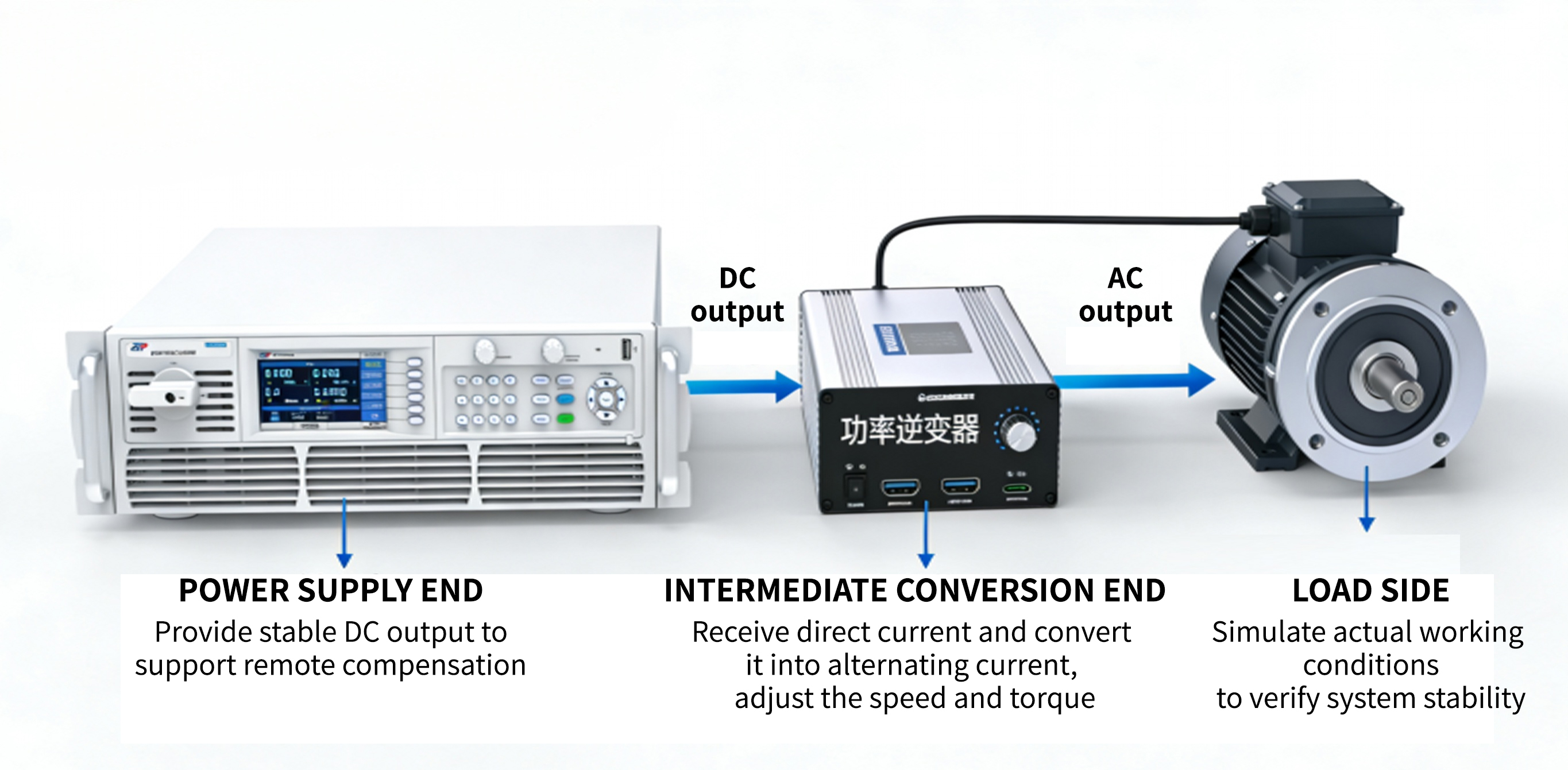
Let's look at a real-world example: An engineer was testing a motor's load-carrying capacity by powering an inverter with a high-power DC power supply. Without remote compensation, the power supply was set to output 50V, but the actual voltage at the inverter input was only 45V. The motor speed fluctuated wildly, and the inverter's undervoltage protection was frequently triggered. Only after connecting the remote compensation line did the voltage immediately stabilize at 50V, and the motor ran smoothly. The root cause of the problem lay in "line loss."
For this application scenario, connecting to a remote compensation device is recommended, especially under high-power conditions. Failure to connect can lead to inaccurate voltage, test failures, and even equipment damage, as detailed below:
1 Load-side voltage deviates from the set value: When a high-power DC power supply supplies power to the inverter and motor, the current is extremely large, and the connecting wires will experience a significant voltage drop due to their own impedance. The power supply displays the local output voltage, while the actual voltage at the inverter input will be lower than the set value. Moreover, the voltage drop becomes more significant as the current increases, making it impossible for the inverter to obtain a stable rated input voltage.
2 Inverter and motor malfunctions: Unstable voltage can lead to decreased inverter efficiency and distorted output waveforms, which in turn affect motor operation. The motor may experience problems such as fluctuating speed and insufficient torque. Furthermore, abnormal power supply can generate additional harmonic losses, which, over time, will accelerate the aging of the motor's internal coils.
3 Distorted and unacceptable test data: If the scenario involves performance testing of an inverter or motor, voltage deviations can severely distort the test data, such as misjudging key indicators like inverter conversion efficiency or motor energy consumption, resulting in test results that do not meet industry standards and making it impossible to complete tasks such as product verification.
4 Triggering protection mechanisms or damaging equipment: When the voltage drops to a certain level, the inverter may shut down due to undervoltage triggering protection. In extreme cases, abnormal voltage may also cause the inverter's internal power devices (such as IGBTs) to overheat and be damaged due to abnormal operating conditions. At the same time, the motor may also experience stalling and other faults due to unstable power supply, resulting in increased equipment maintenance costs.
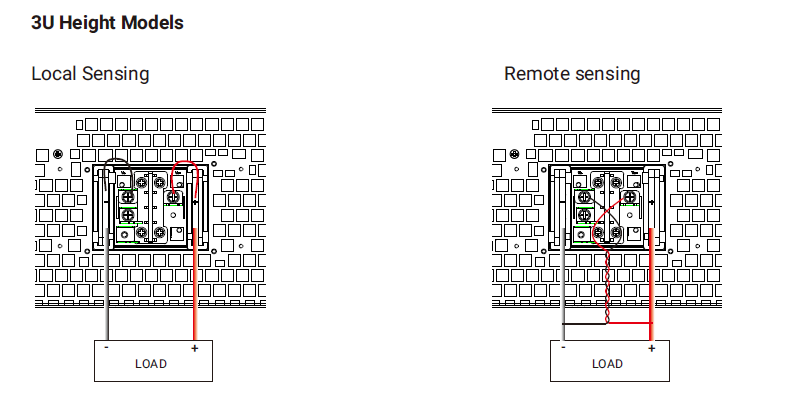
The following is a diagram illustrating the remote compensation connection of the Quantian APM'S SP3U/6U machine.